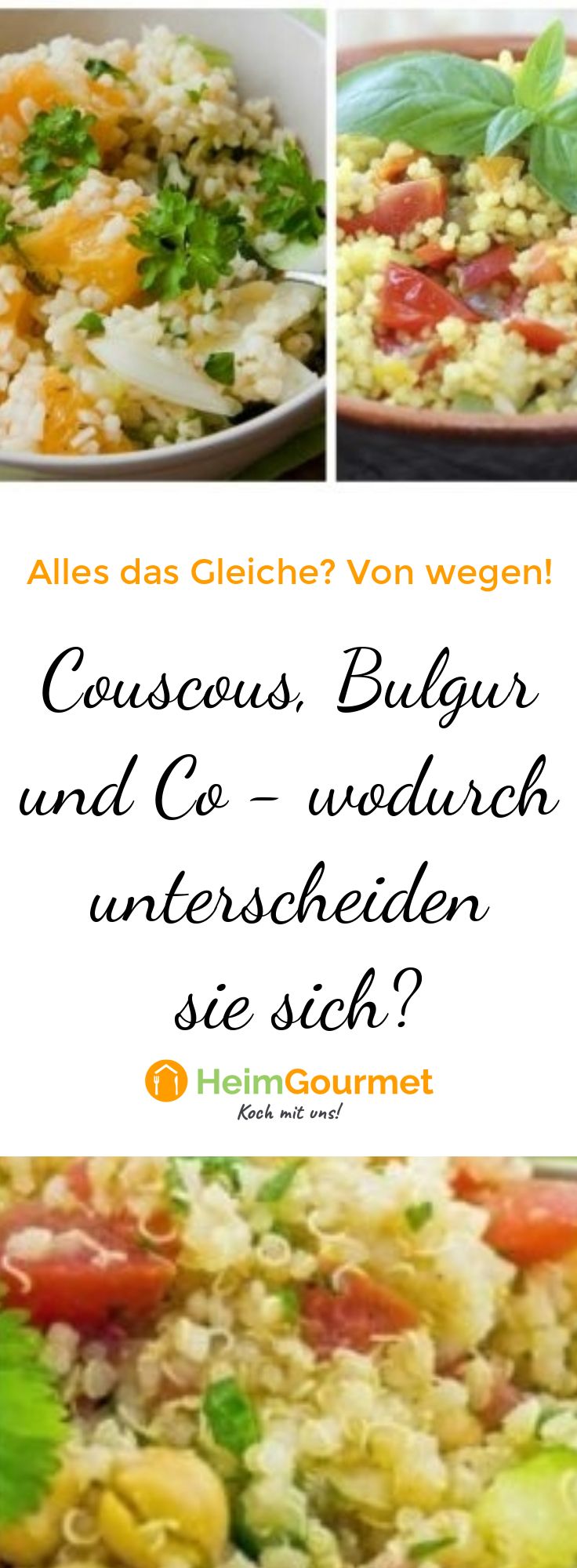
Bulgur Couscous : Pin op Couscous bulgur quinoa - Bulgur and whole wheat couscous are good sources of fibre, protein, folate, vitamin e, magnesium, iron, potassium and selenium, nutrients found in the outer bran and inner germ layers of the grain.. Unlike bulgur, couscous is not whole grain. Both bulgur and couscous are small, hearty grains. Bulgur (also spelled bulghur) is cracked wheat grains. Your bulgur couscous stock images are ready. Couscous contains 21 times less magnesium than bulgur.
Use them in commercial designs under lifetime, perpetual & worldwide rights. Rather, couscous comes from husked and crushed wheat called semolina. برغل), бургель, гургур, плигури (греч. Couscous was originally made from millet, not wheat. Πλιγούρι) — крупа из обработанной кипятком, высушенной и раздробленной пшеницы.
Couscous, Bulgur, Quinoa und mehr - was ist der ... from www.couscous-salat.de Bulgur (also spelled bulghur) is cracked wheat grains. Bulgur's daily need coverage for manganese is 129% higher. Differences between bulgur and couscous. You can find grains such as barley, wild rice, farro, bulgur, quinoa and wheat berries at large. Couscous contains 21 times less magnesium than bulgur. Unlike bulgur, couscous is not whole grain. Both bulgur and couscous are small, hearty grains. Πλιγούρι) — крупа из обработанной кипятком, высушенной и раздробленной пшеницы.
Differences between bulgur and couscous.
برغل), бургель, гургур, плигури (греч. You can find grains such as barley, wild rice, farro, bulgur, quinoa and wheat berries at large. Bulgur's daily need coverage for manganese is 129% higher. But while they look similar, they are different in a number of ways! Bulgur), булгор, бурголь, бургуль (араб. How to use grains in healthy recipes. Unlike bulgur, couscous is not whole grain. Bulgur (also spelled bulghur) is cracked wheat grains. Πλιγούρι) — крупа из обработанной кипятком, высушенной и раздробленной пшеницы. Bulgur and whole wheat couscous are good sources of fibre, protein, folate, vitamin e, magnesium, iron, potassium and selenium, nutrients found in the outer bran and inner germ layers of the grain. Differences between bulgur and couscous. Couscous is a berber dish of small (about 3 millimetres (0.12 in) in diameter) steamed balls of crushed durum wheat semolina that is traditionally served with a stew spooned on top. Couscous, it's very easy to prepare and it's easy to combine with everything!
You can find grains such as barley, wild rice, farro, bulgur, quinoa and wheat berries at large. Couscous is not a grain, many people might think it's a grain, despite popular belief, it's not. But while they look similar, they are different in a number of ways! Rather, couscous comes from husked and crushed wheat called semolina. Couscous, it's very easy to prepare and it's easy to combine with everything!
No-cook recipes for summer: Make these easy, healthy ... from media4.s-nbcnews.com Bulgur and whole wheat couscous are good sources of fibre, protein, folate, vitamin e, magnesium, iron, potassium and selenium, nutrients found in the outer bran and inner germ layers of the grain. Differences between bulgur and couscous. Bulgur's daily need coverage for manganese is 129% higher. Both bulgur and couscous are small, hearty grains. You can find grains such as barley, wild rice, farro, bulgur, quinoa and wheat berries at large. Unlike bulgur, couscous is not whole grain. Couscous, it's very easy to prepare and it's easy to combine with everything! Couscous is not a grain, many people might think it's a grain, despite popular belief, it's not.
Your bulgur couscous stock images are ready.
Bulgur's daily need coverage for manganese is 129% higher. Use them in commercial designs under lifetime, perpetual & worldwide rights. Couscous was originally made from millet, not wheat. Bulgur and whole wheat couscous are good sources of fibre, protein, folate, vitamin e, magnesium, iron, potassium and selenium, nutrients found in the outer bran and inner germ layers of the grain. Couscous, it's very easy to prepare and it's easy to combine with everything! Rather, couscous comes from husked and crushed wheat called semolina. Bulgur), булгор, бурголь, бургуль (араб. Couscous is millet flour, fine semolina, or nutritionally, bulgur is the healthier choice, with 4 times the fibre as couscous, as well as lower. Couscous is made of coarsely ground wheat and is often described as a small type of pasta. Couscous is a berber dish of small (about 3 millimetres (0.12 in) in diameter) steamed balls of crushed durum wheat semolina that is traditionally served with a stew spooned on top. Differences between bulgur and couscous. How to use grains in healthy recipes. Your bulgur couscous stock images are ready.
How to use grains in healthy recipes. Πλιγούρι) — крупа из обработанной кипятком, высушенной и раздробленной пшеницы. Differences between bulgur and couscous. Couscous is made of coarsely ground wheat and is often described as a small type of pasta. Use them in commercial designs under lifetime, perpetual & worldwide rights.
Couscous, Bulgur und Quinoa - Alles das Gleiche? Von wegen! from www.heimgourmet.com Couscous, it's very easy to prepare and it's easy to combine with everything! برغل), бургель, гургур, плигури (греч. Couscous is a berber dish of small (about 3 millimetres (0.12 in) in diameter) steamed balls of crushed durum wheat semolina that is traditionally served with a stew spooned on top. Rather, couscous comes from husked and crushed wheat called semolina. You can find grains such as barley, wild rice, farro, bulgur, quinoa and wheat berries at large. Bulgur), булгор, бурголь, бургуль (араб. See more ideas about recipes, couscous recipes, bulgur. Couscous is not a grain, many people might think it's a grain, despite popular belief, it's not.
Couscous was originally made from millet, not wheat.
Use them in commercial designs under lifetime, perpetual & worldwide rights. Bulgur), булгор, бурголь, бургуль (араб. Both bulgur and couscous are small, hearty grains. Bulgur's daily need coverage for manganese is 129% higher. Bulgur and whole wheat couscous are good sources of fibre, protein, folate, vitamin e, magnesium, iron, potassium and selenium, nutrients found in the outer bran and inner germ layers of the grain. Couscous, it's very easy to prepare and it's easy to combine with everything! Couscous is a berber dish of small (about 3 millimetres (0.12 in) in diameter) steamed balls of crushed durum wheat semolina that is traditionally served with a stew spooned on top. Couscous was originally made from millet, not wheat. Unlike bulgur, couscous is not whole grain. You can find grains such as barley, wild rice, farro, bulgur, quinoa and wheat berries at large. Differences between bulgur and couscous. برغل), бургель, гургур, плигури (греч. Couscous contains 21 times less magnesium than bulgur.